Amigurumi Pattern Generator — Free AI Plushie Pattern Maker
An amigurumi pattern is a round-by-round recipe for crocheting small stuffed toys, and this amigurumi pattern generator turns any animal idea into one while every good pattern still runs on one core skill: working in a continuous spiral around growing and shrinking rounds. A ball starts with 6 single crochet in a magic ring, grows by 6 stitches every round to the equator, holds steady through the middle, then shrinks by 6 to close. Every amigurumi pattern — cat, bear, bunny, dragon — is that same geometry combined into spheres, ellipsoids, cones and tubes, then assembled.
This free amigurumi pattern generator does the arithmetic for you. Describe the plushie you want, and it computes each part's round-by-round stitch counts with the sphere math verified before anything ships — then writes the instructions in standard notation (MR, X, V, A) with assembly notes for sewing parts together. No more rounds that don't add up, no more guessing how many stitches round 7 should have.
Describe It, Hook It
Describe your pattern idea
Why amigurumi patterns from the generator hold up
- ✓Sphere geometry verified: every round's stitch count is computed from the same formula — 6 sc in a magic ring, symmetric increases to the equator, matching decreases to close
- ✓Written in standard notation: MR (magic ring), X (single crochet), V (increase), A (decrease) — readable anywhere in the world
- ✓Part charts included: head, ears, body, limbs each get their own round-by-round chart, so you can hook parts in any order
- ✓Assembly notes with every pattern: which part sews where, and how to stuff before closing
- ✓Free generations daily; premium unlocks PDF downloads for couch-side crocheting
How amigurumi works (the whole technique in one paragraph)
Amigurumi fabric is worked in a continuous spiral — no joining slip stitch, no turning chain, just round after round of single crochet climbing like a spring. The start is a magic ring: 6 single crochet worked into an adjustable loop, pulled tight so no hole remains. From there the shape is steered entirely by increases (2 single crochet in one stitch) and decreases (2 stitches closed into 1). A sphere adds 6 stitches per round until the widest point, works even rounds through the middle, then subtracts 6 per round to a 6-stitch opening that gets closed over the stuffing. That is the entire engine — every amigurumi animal on this site is built from spheres, stretched ellipsoids, pointed cones and open tubes in different proportions.
Two details separate smooth results from lumpy ones. First, the yarn-to-hook pairing: amigurumi uses a hook smaller than the yarn label recommends — a 2.5–3.5 mm hook on yarn that suggests 4–5 mm — because the fabric must be dense enough that stuffing never peeks through. Second, the invisible decrease: working the decrease through front loops only leaves a flat, nearly invisible seam where a standard sc2tog leaves a bump. Patterns from the generator note both, and every round ends with its stitch count printed so a dropped stitch announces itself at the end of the round, not three rounds later.
The rhythm of the craft is why it hooks people: one amigurumi part is 30–90 rounds of repetitive single crochet — work you can do while watching something — punctuated by the short, satisfying focus of increase and decrease rounds. A first amigurumi ball finishes in under an hour; a five-part cat in an evening or two. The assembly stage — sewing parts closed over their stuffing, positioning ears symmetrically — is where a toy gains personality, and the generator's assembly notes cover the sequence.
What the generator does differently from a written pattern
A traditional amigurumi pattern is a fixed object: the designer chose the proportions, and if you want a longer body or a chubbier head, you're on your own modifying round counts — the classic way beginners break a pattern. The generator inverts this: the geometry engine computes any proportions you describe, then the verified numbers become the skeleton the AI writes instructions against. Describe "a chubby cat with big ears" and the head sphere gets a wider equator, the ear cones get taller — with every round count still mathematically consistent.
Stitch verification is the part you never see but always benefit from. Before a pattern reaches your screen, the engine has already checked that every round's starting count equals the previous round's ending count plus increases minus decreases — the bookkeeping that hand-written patterns most often get wrong. The output reads like a professional pattern because the arithmetic behind it is professional: each part lists its rounds in order, each round states its stitch count, and the assembly section tells you what to stuff, when to close, and which part joins which.
The generator also speaks the notation international amigurumi crocheters share. Japanese charts use X/V/A; English-language patterns write sc/inc/dec; the output shows both, so a pattern generated here can be followed from a Tokyo chart reader or a Texas tutorial without translation. That matters because amigurumi is a global community — the technique's home vocabulary ("amigurumi" itself) travels with the craft wherever it goes.
Project recipes that suit amigurumi
First project: the single sphere — 6 sc in a magic ring, 6 increases per round to 36, even rounds, then mirrored decreases to a close. Stuff it, close it, and you have the core skill in your hands within an hour. Second project: a two-part keychain — a sphere head with a cone hat or ears — where sewing parts on teaches placement. From there, the classic progression is a bear (head, ears, body, arms), then a cat (adds a tail), then anything with a muzzle or limbs you design yourself.
Gift-scale projects are amigurumi's sweet spot: a desk companion for a colleague, a nursery-safe toy in cotton (embroidered eyes, no buttons — safety first for babies), a holiday ornament in seasonal colors. The finished objects are small — palm-sized to football-sized depending on yarn weight — which means every project is affordable, portable and finishable. Worsted cotton on a 3 mm hook gives a palm-sized result from one 50 g ball per color.
Selling finished amigurumi is how many crocheters meet the craft's economics: the market rewards distinctive characters and clean finishing — tight fabric, invisible decreases, firmly attached parts. Generated patterns give you a starting skeleton to customize: swap ear shapes, stretch a body, resize by changing yarn weight (same pattern, bigger toy). The pattern is the recipe; your yarn and tension are the seasoning. Always double-check the finished piece against the chart counts before gifting or selling — the math is verified, but your gauge is your own.
The Amigurumi Sphere — every plushie starts here
✓ stitch-verified exampleThe core shape behind every amigurumi: a sphere worked in a continuous spiral. Watch the arithmetic breathe — round 1 starts with 6 stitches in a magic ring, every round below adds exactly 6, then the count holds and mirrors back down to a 6-stitch closing. Hook it in cotton on a 3 mm hook, stuff firmly, and you have the head of your first plushie in under an hour.
Stitch chart — each row is one round
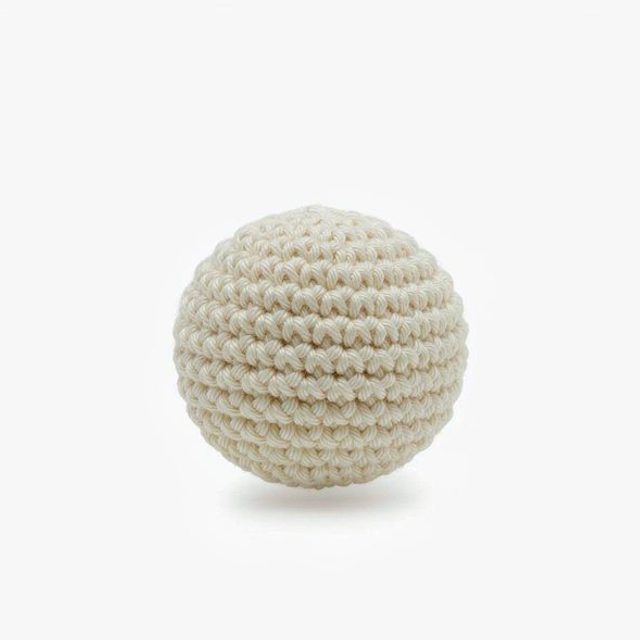
The finished piece you are crocheting toward
Written instructions (9 rounds)
Explore the CrochetPattern.io toolkit — free to start
All tools are free to start — upgrade any time for unlimited generation.
Want a pattern that's exactly yours?
Describe any idea — the AI crochet pattern generator turns it into a charted pattern with verified stitch counts. Free to start, no sign-up required.
Open the Free Generator →Frequently Asked Questions
- What is CrochetPattern.io?
CrochetPattern.io is a free AI-powered crochet pattern studio. Describe what you want to make — an amigurumi animal, a filet chart or a mosaic blanket — and it builds the grid chart and row-by-row written instructions with verified stitch counts, then keeps adding new pattern collections regularly.
- How does CrochetPattern.io turn my idea into a pattern?
A stitch-math engine first computes the geometry — for example, how many stitches each round of a sphere needs to stay round. The AI then translates that data into human-readable instructions using standard notation (X = single crochet, V = increase, A = decrease, MR = magic ring). Because the stitch counts come from math instead of the AI's imagination, the start and end counts of every round reconcile.
- Is CrochetPattern.io really free to use?
Yes — every day you get free generations with the standard engine, no sign-up required. When you need more, paid options include a monthly subscription for unlimited generation and one-time credit packs that never expire. Premium models produce more detailed charts and full PDF downloads.
- Are the generated patterns accurate?
Stitch counts are computed mathematically, which eliminates the most common AI failure — patterns that don't close up or grow unevenly. Crochet is still a hands-on craft: gauge, yarn choice, and tension affect the final piece, so we recommend working a small swatch first. Treat every pattern as AI-assisted and double-check counts as you go.
- Can I sell items I make from the patterns?
Yes. You keep full rights to the physical items you crochet, including selling them at markets or on Etsy. The pattern text and charts themselves are for personal use — please don't resell or redistribute the pattern files themselves.
- What's the difference between filet and mosaic crochet?
Filet crochet uses open and filled mesh squares to build a picture — it works up fast and is the easiest charted technique. Mosaic crochet uses overlay stitches and locking rows for bold geometric designs with only one color per row. The site has a dedicated generator for each technique.
- Do I need to sign up to generate a pattern?
No. The generator works for guests with daily free generations. Creating a free account adds generation history across devices, and subscribing removes the daily limit entirely.
- Do the patterns include yarn and hook recommendations?
Yes. Every generated pattern includes the materials you need to get started — recommended yarn weight, hook size, and the gauge assumptions behind the stitch counts. If you substitute a different yarn weight, check your gauge with a small swatch first so the finished size matches the pattern.
- Why do AI-generated crochet patterns go wrong — and how is this tool different?
Most AI tools generate pattern text without checking the arithmetic. In amigurumi, every increase adds a stitch and every decrease removes one, so a round must end with exactly the count it claims — when the math drifts, the toy comes out lopsided or won't close. CrochetPattern.io inverts the workflow: a deterministic stitch-math engine computes every round first, and the AI only writes the instructions around numbers that already add up. Every charted pattern carries a stitch-verified badge for that reason.
- What kinds of patterns can the generator make?
Amigurumi toys are the strongest suit — the stitch engine handles spheres, cones, tubes and flat circles, so any creature built from those shapes gets a true charted pattern with part-by-part assembly instructions. Filet and mosaic crochet generators produce open/filled mesh grids and overlay charts respectively, and the effect-image pipeline covers blanket motifs and decorative pieces. New technique engines are added regularly.